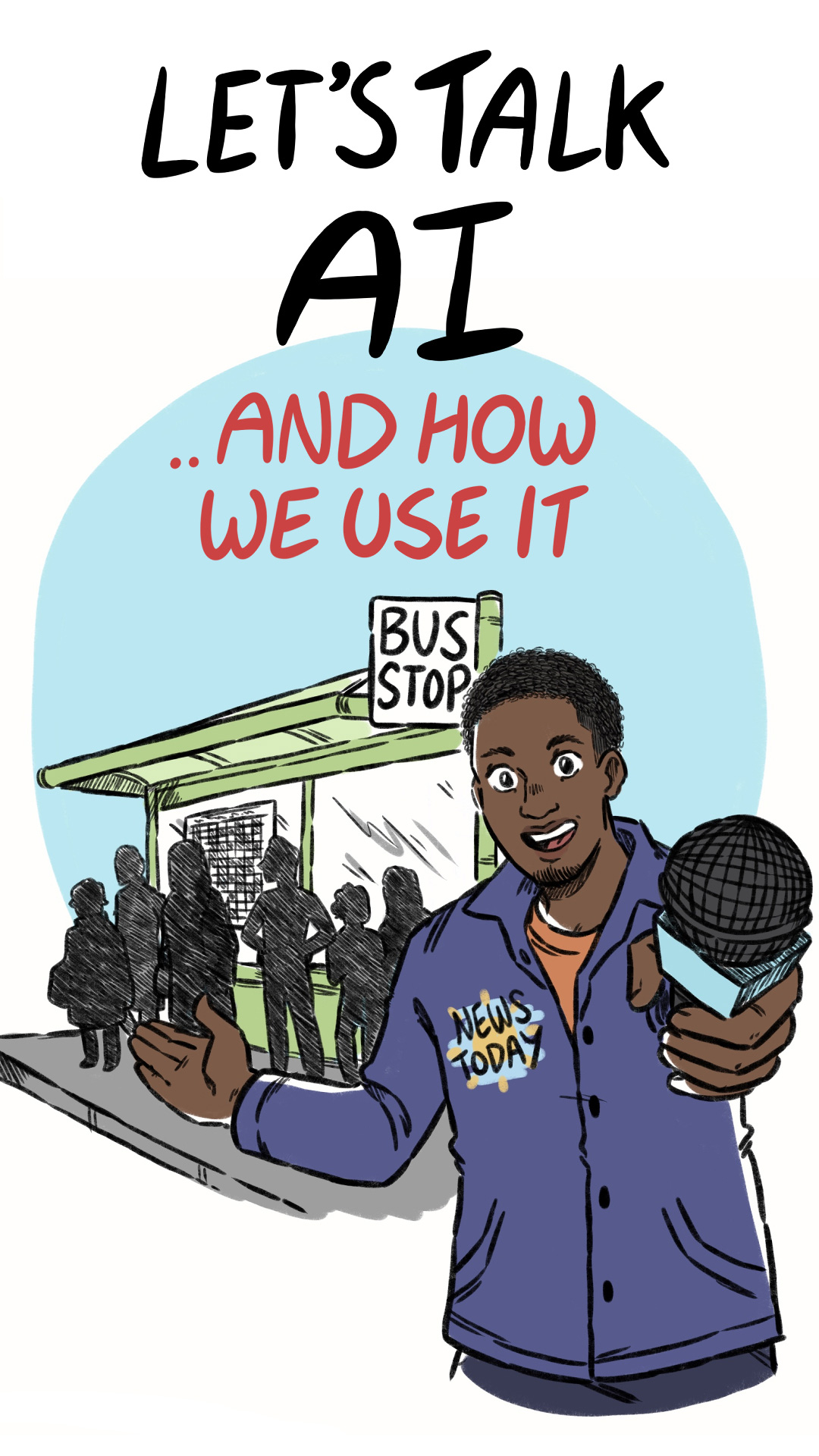
Let’s Talk AI is a fresh, first-of-its-kind campaign. It’s designed to bring conversations about artificial intelligence out of tech labs and boardrooms and move them onto our streets and into our homes. Through relatable cartoons and community stories, we’re breaking down the basics of AI in everyday life — whoever you are.

From bus stops and community libraries, to radio waves and social media feeds, we’re popping up across the community to make sure everyone can take part. 
We are inspired by a few things.

  • Dr Susan Oman’s research – especially on the Public Voices in AI project
  • A movement to include all citizens in AI decision-making
  • The belief that people deserve better understanding of AI in an AI-driven society
  • The artwork of webtoon artist, Kitty McEwan
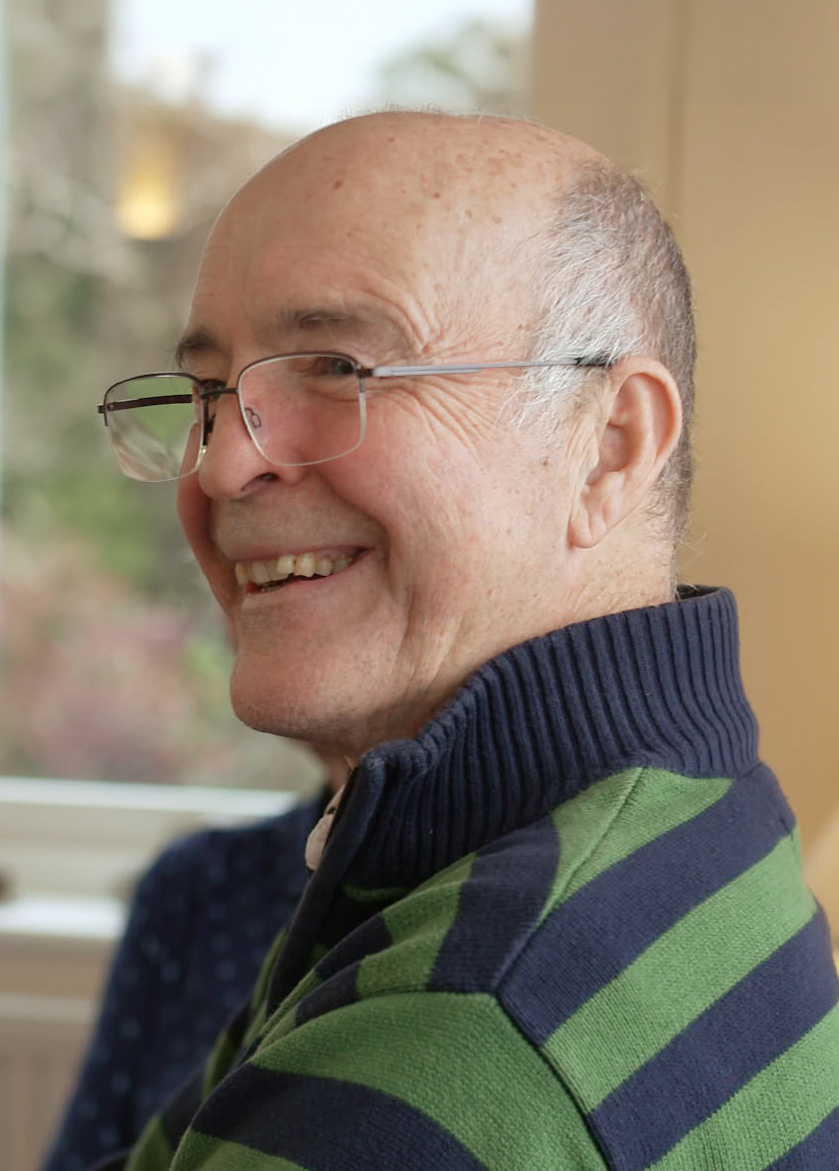
  • The passion of Margaret Colling, a retired librarian from Morecambe Bay 
  • The communities and experts we’ve spoken to along the way

From Tea Shop to Tech Summit

Margaret Colling was volunteering at her local teashop when an unexpected opportunity knocked: a chance to join the first-ever AI Impact Summit.

As part of “The People’s Panel in AI” Margaret joined a diverse group of citizens, whether tech curious or novice, to give the public a voice in the future of technology. Her journey didn’t stop there. A year later, Margaret and fellow panelist Sharif Hasan joined the £1M Public Voices in AI project, led by the Digital Good Network from the University of Sheffield. They offered advice to the project’s researchers, guiding how they did the research – and how they told people what they found! Working with Dr. Susan Oman, they helped bridge the gap between academic research and the public, inspiring a unique webtoon of an evidence review (brought to life by artist Kitty McEwan).

Research, Reimagined.

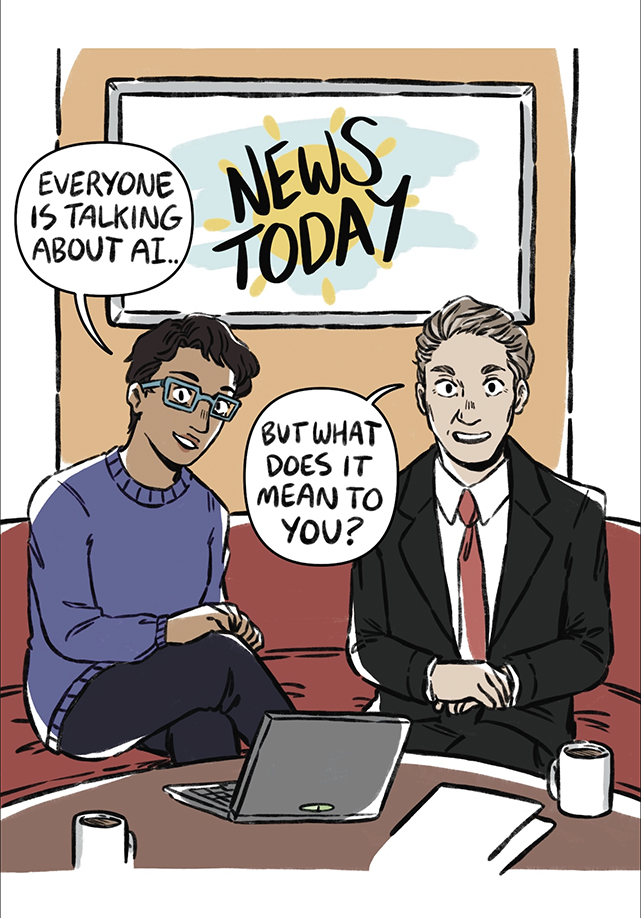
What’s a webtoon? It’s a digital comic designed to be read by scrolling down your phone. Dr Oman collaborated with artist Kitty McEwan to turn complex social research about AI into a visual story. Guided by our “BBC-style” newsreader narrators, the original webtoon journeyed through the real-world social impacts of AI, and the decisions around it. Demonstrating how people should be included, but aren’t, and why that’s important. The People’s Panel loved this approach for its clarity and fun.

Inspired by the power of our original webtoon, Margaret became a tireless advocate for AI literacy using this approach.

From BBC Radio and Local Councils to the halls of Parliament and national tech conferences, she shared a simple vision: “We need widespread AI Awareness. Put these webtoons on bus stops up and down the land.” At the National UK AI Conference, we were able to announce that thanks to an EPSRC AI Skills Fund, we secured the funding to turn Margaret’s dream into a national pilot for a nationwide campaign.

Devised by the people, with the people and for the people

In October 2025 we started talking to the general public about our ideas for this project. Between November and January 2026, we hosted workshops with communities in: Plymouth, Sheffield and Morecambe Bay / Lancaster to help our thinking, planning and execution. 

We asked people what they wanted to know about AI – and how they wanted to find out. We showed people the AI stories that we were planning to tell, gaining inspiration for new characters along the way. We are proud that some of the webtoon characters are real people we met – and we are telling their real AI stories. 

For more about the workshops, click Workshops

Funding and support

Let’s Talk AI is a pilot funded by an EPSRC AI Skills Award. It is further supported by The University of Sheffield and the Centre for Machine Intelligence. 

It follows on from activities on the  Public Voices in AI project.

About Public Voices in AI

The Public Voices in AI project aimed to ensure that public voices are front and centre in artificial intelligence research, development and policy. It ran from March 2024 to March 2025 and was supported by £1million in UKRI investments, from Responsible AI UK and the Arts and Humanities Research Council’s Bridging Responsible AI Divides programme. 

Visit here for guidance and findings on including the public in responsible AI development and research: